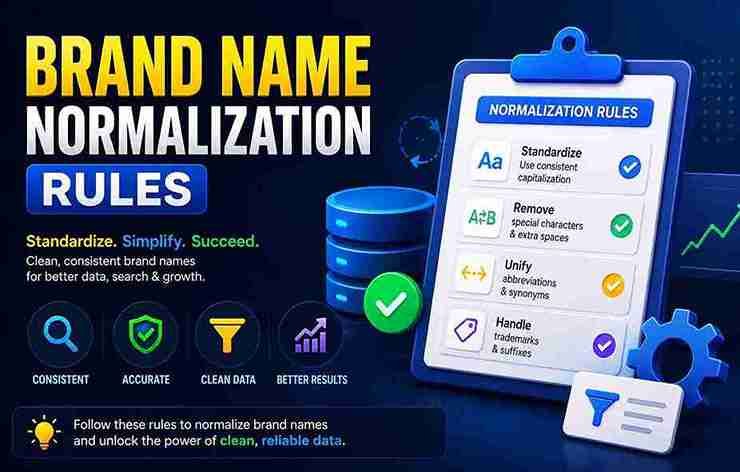
Brand Name Normalization Rules: The Ultimate Guide for Data Consistency
What Are Brand Name Normalization Rules?
When you manage large databases or e-commerce inventories, inconsistencies in how products are listed can wreck your search performance. You might see “Apple,” “Apple Inc.,” and “Apple Inc” all representing the same entity. Brand name normalization rules are the systematic guidelines you apply to standardize these variations into one uniform format. By cleaning your data, you help search engines and internal algorithms recognize your entities correctly, which is the cornerstone of building topical authority.
Why Brand Name Normalization Matters
Without standardized naming, your data becomes fragmented. Search engines struggle to group products, leading to poor indexing and low-quality user experiences. Applying brand name normalization rules ensures that every touchpoint—from your internal search bar to Google Shopping—identifies your items accurately. This improves your site’s crawl efficiency and helps you rank for high-intent search queries.
1. Removing Special Characters and Punctuation
Consistency starts with cleaning. Eliminate non-alphanumeric characters like periods, commas, or trademark symbols that cause database duplicates.
- Action: Convert “Sony Corp.” and “Sony, Inc.” to “Sony”.
- Benefit: Reduces noise and ensures clean matching for your database.
2. Standardizing Casing Formats
Mixed casing confuses both users and machine learning models. Decide on a casing strategy and enforce it across your entire catalog.
- Action: Apply Title Case (e.g., “Nike Air”) or Uppercase consistently.
- Goal: Create a professional, clean UI that builds user trust immediately.
3. Handling Legal Entity Suffixes
Suffixes like “LLC,” “Ltd,” or “Co” are rarely useful for customer search intent. Normalization requires stripping these from public-facing labels.
- Action: Identify “Samsung Electronics Co., Ltd” and transform it to “Samsung”.
- Impact: Simplifies the product display and focuses the user on the brand identity.
4. Creating a Master Synonym Map
Some brands are known by multiple names or common misspellings. A synonym map links these variations to a single primary entry.
- Action: Direct “Big Blue” or “IBM Corp” to the normalized entity “IBM”.
- Use: Enhances internal search capabilities and prevents data silos.
5. Managing Sub-Brand Hierarchy
Complex brands often have sub-labels. Define whether these should be separate or merged under the parent brand.
- Action: Decide if “PlayStation” should remain separate or be listed as “Sony PlayStation”.
- Requirement: Maintain this hierarchy consistently across your entire domain.
6. Correcting Common Typographical Errors
Users often mistype brand names. Your normalization process should account for these predictable human errors.
- Action: Map common typos like “Appel” or “Samusng” to their correct versions.
- Result: Improves UX and prevents “no results found” pages.
7. Implementing Automated Validation Scripts
Manual cleaning is prone to human error. Use regex or data validation scripts to flag entries that violate your rules.
- Action: Run automated audits weekly to catch new, non-normalized entries.
- Benefit: Ensures your data remains clean as you scale your operations.
8. Handling Multi-Language Variations
If your site operates globally, you must normalize brand names across different languages and alphabets.
- Action: Ensure Japanese, Chinese, or Cyrillic brand variations map to a universal key.
- Goal: Global data integrity across all localized domains.
9. Integrating with Search Engines (Schema Markup)
Normalization is vital for Structured Data. When you define a brand in your Schema markup, it must match your normalized database.
- Action: Use the
brandproperty in your Product Schema consistently. - Result: Increases the probability of appearing in rich snippets and Google’s AI Overviews.
10. Documenting Your Normalization Policy
Your team needs a single source of truth. Keep a living document that outlines your specific normalization requirements.
- Action: Record all new rules as your product catalog grows.
- Value: Prevents drift and maintains high data quality over time.
Data Normalization Quick Reference Table
| Original Entry | Normalized Version | Action Taken |
| Nike, Inc. | Nike | Removed suffix |
| G.U.C.C.I | Gucci | Removed punctuation |
| samsung Electronics | Samsung | Standardized casing |
| Micrsoft | Microsoft | Corrected typo |
| Adidas (official) | Adidas | Cleaned text |
Frequently Asked Questions (FAQs)
1. How do brand name normalization rules help SEO?
They reduce data fragmentation, helping Google’s crawlers understand your product hierarchy, which leads to better indexing and higher keyword relevance.
2. Should I keep “LLC” in my product titles?
No. It adds unnecessary character count and provides zero value to the user or search engines.
3. What is the biggest mistake in brand normalization?
Inconsistency. Applying rules to only half of your catalog creates more confusion than having no rules at all.
4. How often should I audit my brand names?
For active e-commerce sites, a monthly audit is recommended to ensure new product additions follow established rules.
5. Does normalization affect internal site search?
Yes. A normalized database ensures that when a user types a common synonym or typo, your search engine finds the correct product.
6. Can AI help with normalization?
Yes, machine learning models can identify patterns and suggest mappings, but human oversight is required to finalize the rules.
Optimize Your Data Today
Mastering brand name normalization rules is a technical SEO win that compounds over time. By cleaning your entity data, you build a more authoritative, trustworthy site that users and search engines prefer. Start by auditing your top 100 products and applying these rules to create a clean, scalable foundation for your digital brand. Have you audited your product database for consistency this month? Start today to see the difference in your search rankings!