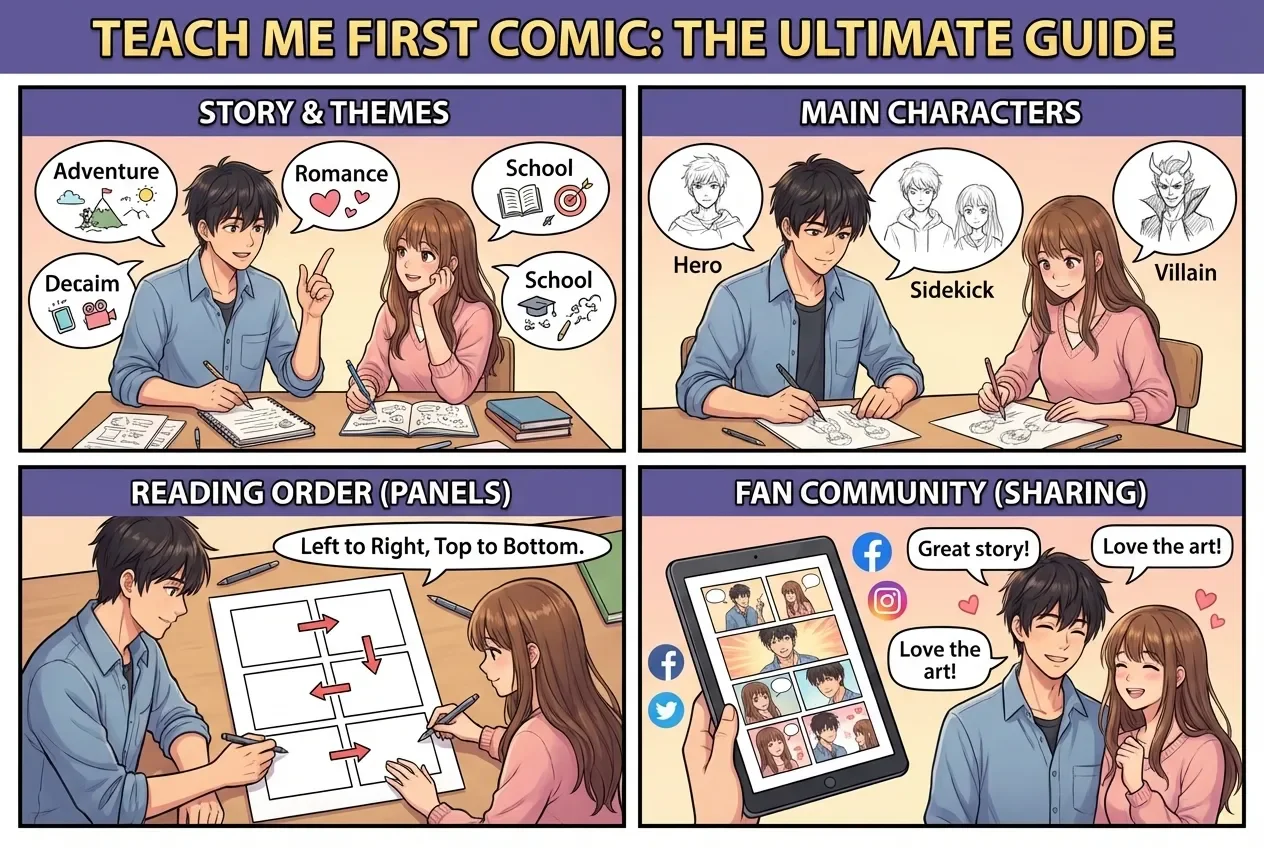
Teach me first comic
The Complete Guide to the “Teach Me First” Comic: Plot, Tropes, and Where to Read Safely
If you recently found yourself scrolling through short-form video apps and stumbled upon dramatic panel edits, voice-over explainers, or reaction videos tagged with “teach me first comic,” you are not alone. A massive wave of reader interest has pushed this specific title into the spotlight, generating a highly active community of fans trading theories, shipping moments, and reading recommendations.
However, trying to actually locate and read the series can feel like navigating a minefield. You will likely run into a nest of titles with similar names, broken links, and unofficial uploads. This guide breaks down exactly what the series is, clears up the widespread naming confusion, and explains how to discover legitimate, safe reading options.
What Exactly is the “Teach Me First” Comic?
At its core, the title belongs to the booming genre of digital romance webcomics and manhwa. These stories are designed for vertical scrolling, characterized by vibrant, full-color art, and serialized chapter releases.
The Core Premise and Story Dynamics
Titles that utilize the “teach me” framework almost always center around a specific relationship dynamic: an experienced character paired with a curious, inexperienced, or unsatisfied protagonist. The narrative hook relies on mentorship and personal growth, which inevitably bleeds into emotional and romantic tension.
Readers are drawn to this dynamic because it offers a structured progression of the relationship. The “lessons” act as built-in plot devices that force the characters into close proximity, breaking down boundaries and leading to vulnerable, high-stakes interactions. It is a character-driven approach to storytelling that prioritizes internal emotional development just as much as external plot events.
“Teach Me First” vs. “Teach Me”: Clearing the Canvas Confusion
The biggest hurdle new readers face is title disambiguation. When a comic goes viral, the algorithm often lumps similarly named works together, leading to intense reader confusion.
If you search for the series on official apps like Naver’s WEBTOON, you will likely find a Canvas (self-published) series simply titled “Teach Me.” This specific Canvas title is a lighthearted comedy. It is currently awaiting an official content rating from its creator, but it is definitively not the mature, adult-leaning romance story circulating in social media edits.
The viral series people are actually looking for is often discussed alongside platforms like Honeytoon. When fans talk about “Teach Me First” in the context of intense romance or “uncensored” chapters, they are referring to a completely different, mature-rated property. Mixing up these two titles is the number one reason readers end up confused and frustrated.
Why This Title is Trending Across Social Media
Digital comics no longer grow their audience strictly through platform-native discovery pages. Virality is now driven by user-generated content on external social networks.
The Power of Reaction Cuts and Fan Edits
The surge in popularity for this specific comic is directly tied to the fan editing community. Creators take snazzy snippets of dramatic panels, twist reveals, or high-tension moments and layer them over trending audio tracks. These “reaction cuts” act as highly effective, bite-sized trailers.
Additionally, “explainer bites” have become incredibly popular. These are quick voice-over videos where a reader breaks down the plot, explains character motivations, or reviews the latest chapter drops. This ecosystem of shared commentary pushes massive amounts of traffic toward the title, while simultaneously blurring the lines between the actual comic and fan-made alternate universe (AU) spin-offs.
The Appeal of the “Mentorship” Romance Trope
Beyond the marketing mechanics of social media, the story is trending because it taps into a highly desired fictional trope. The dynamic of guiding someone through unfamiliar territory—whether that is navigating a new career, understanding complex emotions, or exploring physical intimacy—creates a natural power imbalance that slowly equalizes as the story progresses.
Readers enjoy watching the “teacher” figure lose their cool composure as they develop genuine feelings for their “student.” It is a slow-burn narrative structure that rewards patience, making each new chapter release an event for the community.
Navigating the Digital Comic Ecosystem Safely
When a series hits a certain level of virality, it immediately attracts third-party uploaders. This leads to a flood of reuploads, clipped content, and “uncensored” mirrors scattered across unofficial websites.
The Hidden Dangers of Third-Party Mirror Sites
Hunting down a popular comic outside of its official home is risky. Third-party document-sharing sites and aggregate platforms are notorious for hosting intrusive advertisements, malicious pop-ups, and malware.
Furthermore, the reading experience on these sites is heavily compromised. Chapters are often uploaded out of order, missing pages, or stitched together with poor-quality machine translations that ruin the nuance of the original dialogue. What seems like a quick way to catch up on the story often results in a disjointed, frustrating reading experience.
How to Identify Official Platforms and Publishers
To read safely and support the original creators, you need to verify the platform. Here are the signs that you are using a legitimate service:
- Clear Licensing: The platform will openly state its licensing agreements and credit the original author, artist, and translation team.
- Consecutive Organization: Official readers feature clear, consecutive chapter numbers, release schedules, and author notes.
- Monetization Transparency: Legitimate platforms usually operate on a freemium model (where you wait for free chapters) or require a straightforward coin/token purchase system to unlock the latest updates. They do not rely on aggressive, screen-blocking pop-up ads.
If a site requires you to click through multiple unsecure links just to view an image file, you are not on an official platform.
Content Warnings and Reader Discretion
The digital comic space caters to a massive variety of demographics, and understanding content labels is essential before diving into a new series.
Understanding Webtoon Age Ratings
Because the “Teach Me First” discourse heavily revolves around its mature themes, readers must pay attention to age gates. Official platforms utilize strict rating systems (such as 16+ or 18+ icons) and require users to confirm their age before accessing certain titles.
These advisories are not just suggestions; they are indicators of the narrative content. A mature rating signifies that the story will deal with complex adult situations, strong language, and potentially explicit themes that are not suitable for younger audiences.
The “Uncensored” Label Explained
In the context of imported digital comics and manhwa, the term “uncensored” is frequently used as a buzzword by third-party sites to attract clicks. Officially, an uncensored version of a comic simply means it is the original, director’s-cut vision of the artist, complete with all mature situations left intact, rather than a modified version edited for a general-audience platform.
If you are an adult seeking out this version of the story, stick to official publishers that offer mature profiles. Bypassing official age gates to hunt down pirated “uncensored” panels only hurts the creator and puts your device at risk.
What to Read Next: Recommendations for Similar Tropes
If you enjoy the themes present in the “teach me” trope, the broader world of digital comics has a deep library of similar stories. Look for titles that feature the “experienced/inexperienced” tag or stories centered around workplace mentorships, college tutoring arrangements, or slow-burn emotional education.
Many official platforms have highly curated genre tags. Exploring the “Modern Romance” or “Drama” categories and sorting by popularity will easily yield dozens of high-quality, legally licensed series that capture the exact same emotional resonance.
Final Thoughts on the Viral Webcomic Phenomenon
The intense curiosity surrounding the “teach me first comic” highlights how dramatically the way we discover and consume stories has shifted. Social media can turn a niche digital comic into a global talking point overnight.
By understanding the difference between similarly named titles, recognizing the value of official reading platforms, and respecting content warnings, you can cut through the noise. The digital comic space is incredibly rewarding when navigated correctly, offering high-fidelity art and deeply engaging narratives that update directly to your phone week after week.
Q: What is the difference between “Teach Me” and “Teach Me First”?
A: “Teach Me” is an all-ages comedy series hosted on Webtoon Canvas. “Teach Me First” refers to a separate, mature-rated romance comic that frequently trends on social media platforms and is often associated with publishers like Honeytoon.
Q: Why is the comic trending on social media?
A: The series has gained massive popularity through fan-made edits, reaction videos, and voice-over explainers that highlight dramatic moments and the popular “mentorship” romance trope.
Q: Where can I read the comic safely?
A: To read safely, avoid third-party mirror sites. Look for official publishers and licensed apps that feature clear creator credits, consecutive chapter lists, and proper age gates.
Q: Is this comic suitable for all ages?
A: No. The viral comic often discussed under this title features mature themes and adult situations. It is intended strictly for adult readers and should be accessed through properly age-gated platforms.
Q: What does “uncensored” mean in webcomics?
A: It refers to the original version of the comic with mature themes intact, rather than a modified version edited to meet the guidelines of general-audience platforms.
About the Author

